Families and Households 1.6- Childhood

Childhood is partly a social construct:

  1. sociologists says that childhood is not only a biological stage in development but a social construct. The idea that children are different from adults in their values, behaviour and attitudes isn’t the same everywhere in the world. It is not universal, some cultures view childhood in different ways

An example of this is how the school leaving age in Britain has moved form 12 to 16 in the last century. It would now be socially unacceptable, but also illegal to leave school and work full-time at the age of 12. The age that childhood ends and adulthood begins has changed with social attitudes

PANE PILCHER (1995) highlighted separateness of childhood from other life phases. Children have different rights and duties from adults, and are regulated and protected by special laws

ARIÈS says a cult of childhood developed after industrialisation

-Said the concept of childhood in Western European society has only existed in the last 300 years. Before this, in medieval society a child took on the role of an adult as soon as they were physically able. Children in medieval paintings look like small adults.

-With industrialisation social attitudes began to value children as needing specialised care and nurturing. The importance of the child reinforced the importance of the role of the housewife, it was the housewives job to look after the children.

-This cult of the child first developed in the middle classes and over time has become a part of working class values

Children are protected by special laws

  1. Children are subject to laws that restrict their sexual behaviour, their access to alcohol and tobacco, and the amount they are paid for work. These laws are less of that, that affect adults
  2. Offered extra protection through the Child Act 1989, which allows them to be taken away from their parents if the state judges them unsuitable/incapable
  3. Price reductions on goods and services, e.g. less on public transport, and not paying VAT on clothes
  4. The NSPCC argue that they need greater protection. A NSPCC report by CAWSON et al (2000) said that 16% of children under 16 have experienced sexual abuse during childhood, and 25% experienced physical violence

British society in the 21st century is more focused on children

  1. There is a lot of social policy related to childhood, children are recognised as having unique human rights. The United Nations Convention on the Rights of Child was ratified in 1990 by all the UN members- EXCEPT USA and SOMALIA
  2. In Britain the Child Support Act 1991 established the child support agency. Giving children the legal right to be financially supported by parents, where they live with them or not. The act makes courts take children points of view into custody cases and consider their point of view.
  3. Children also hold more power in modern British society than at any other time in history. It has been identified by advertisers who recognise the financial power of children, which is referred to as pester power. Advertisers use products that children will pester their parents for, until they buy them

FUNCTIONALISTS see the position of children in society as a sign of progress

SHORTER makes the march of progress argument:

-Society has a functional need for better educated citizens, and lower infant mortality rates

-School leaving ages have gone up and child protection has improved

-The current position of children is the result of positive progression

Childhood varies according to gender, class and ethnicity

  1. children in poverty tend to suffer poorer health, a lack of basic necessities, lower achievement in school, poorer life chances and higher incidences of neglect and abuse
  2. JUNE STATHAM and CHARLIE OWENS (2007) found that black and dual heritage children were more likely to end up in care, than white or asian children
  3. JULIA BRENNEN (1994) said that asian families were much stricter with their daughters than sons
  4. HILLMAN (1993) found boys are generally given more freedom by their parents than girls

CHILD LIBERATIONIST believe that society oppresses children

DIANA GITTINS (1985) argues that there is an age patriarchy, adults maintain authority over children. The achieve this using enforced dependency through protection from paid employment , legal controls over what children can and can’t do

HOCKEY and JAMES (1993) noted that childhood was a stage that most children wished to escape from snd which many resisted

Sociologists disagree over future of childhood

NEIl POSTMAN (1994)

Childhood is disappearing, children grow up very quickly and experience things only open to adults in the past, argues out definitions of childhood and adulthood will change soon

NICK LEE (2005)

disagrees with POSTMAN, he agrees that childhood has become ambiguous, but argues that parents have financial control and children can only spend as much as their parents allow. So the paradox of childhood is one of dependence and independence at the same time
Families and Households 1.5- Roles and Relationships within the family

The rise of the nuclear family led to joint conjugal roles:

Conjugal roles are the roles of the husband and wife (or partner and partner) within a home. ELIZABETH BOTT (1975) studied how jobs and roles within the family were allocated to men and women in modern industrial Britain.

Her study is old, but it is the foundations for the debate.

BOTT (1957) identified two ways household jobs can be shared:

  1. Segregated Roles- husbands and wives lead separate lives with clear and distinct responsibilities within the family. The man goes to work, the women look after the kids
  2. Joint Roles- husband and wives roles are more flexible and shared with less defined tasks for each. Everything is shared

WILMOTT and YOUNG (1973)

Studied the changing structures of British families from extended to nuclear. They believed that the increase in nuclear families meant joint conjugal roles would increase. They predicted that equal and shared responsibilities would be the future norm in British families.

OAKLEY (1974)

Pointed out that their study only required men to do a few things around the house to qualify as having joint roles. Their methodology overlooked the amount of time spent doing housework, making 10 minutes washing up the equivalent of doing an hours hovering. Oakley’s research found it was rare for men to do a lot of housework

Conjugal Roles are still unequal, although most women have paid jobs

Since previous research, there have been a development in the amount of family types, sociological research shows that an equal share of paid employment hasn’t led to an equal share in domestic labour:

  1. EDGELL (1980)- tested Willmott and Young’s theory and found non of his sample families had joint conjugal roles in relation to housework. However, found an increase in shared childcare.
  2. OAKLEY (1974)- found that women took on double burdens, taking on paid work and keeping the traditional responsibilities in the home
  3. BOULTON (1983)- concluded that men may help out with specific bits of childcare, but women are primarily responsible
  4. FERRI and SMITH (1996)- found that two thirds of full time working mothers said they were responsible for cooking and cleaning. Four fifths of the same group said they were responsible for laundry

BRITISH SOCIAL ATTITUDES SURVEY (1991) was a large scale study of over 1000 people, and found a clear division of labour, women did most of the work.

Industrialisation led to the creation of the HOUSEWIFE

  1. OAKLEY thinks the role of the housewife was socially constructed by the social changes of the industrial revolution, where people started to go to work in factories instead of home.
  2. Married women are not usually allowed to work in factories, the role of housewife was created for them
  3. Middle class households had female servants for domestic jobs, working class women did it themselves
  4. Cultural values that said women should be in charge of housework were so dominant that they said it came naturally to them

Decision making and sharing of resources can be unequal

DEGELL (1980)

interviewed middle class couples, and found men had decision making control over things both husband and wife saw as important, whilst women had control over minor decisions. Half of the husbands studied, and two thirds of wives, expressed that sexual equality was a bad thing

Pahl (1989, 1993)

researched money management by 100 dual income couples, and found that the most common form of financial management was husband controlled pooling, which is what she defined as “the money is shared, but the husband has the dominant role in how its spent”

Explanations of inequality are based on theories about power in society

1.FUNCTIONALISTS, men and women still largely perform different tasks and roles within the family because its the most effective way to keep society running smoothy

2. MARXIST, interpret the fact that men and women have different roles as evidence of the power of capitalism to control the family life. They say that women and men have unequal roles because capitalism worked best that way. Even with more women working outside the hole in equal hours to men, the capitalist class needs to promote women as naturally caring and nurturing to ensure workers are kept fit and healthy. The role of women is portrayed ideologically through media

3. FEMINISTS, inequality in household roles demonstrate inequality in power between men and women. A patriarchal society will produce conjugal relationships between societies systems and values will inevitably benefit men at the expense of women

Women in families can be responsible for all the emotional work

Doing emotional work in a family means reacting and responding to other family members’ emotions, alleviating pain and distress, and responding to and managing anger and frustration

DIANE BELL (1990) suggested that theres an economy of emotion within all families and that running economy is the responsibility of women.

She says managing family emotion is a big like bookkeeping, the women’s role is to balance the families emotional budget

DUNCOMBE and MARDEN (1995) found that women in families are often required to do housework and childcare, paid employment and emotional work, amounting to triple shift work

They found that married women were happier when their husbands shared some of the burden or emotional work

They also found that emotional work is predominantly gendered, women having the main responsibility for managing whole family emotions

GILLIAN DUNNE (1999) studied lesbian households, she found the distribution of responsibilities such as child care and housework tended to be equal between the partners. The couples were flexible and fair in the way they shared work.

Dunno though in heterosexual relationships, the divisions of work in the household was usually less fair because of traditional ideas about masculinity and femininity

Some sociologists see child abuse as a term for power

Sociologists study child abuse by parents and carers in terms of a power relationship.

NEED to be able to explain abuse as a form or power RATHER than explaining details of abuse

a parent or carer is able to abuse a child by manipulating the responsibilities and trust which go along with the role of parent and carer. Families are private and separate from the rest of society. This makes it less likely for the child to report the abuse

social policies have been adapted to give some protection to children. The Children Act 1989 was set up so the state can intervene in families, if social workers are concerned about children safety

Domestic violence affects many families in the UK

ELIZABETH STANKO (2000)

  1. women is killed by her current or former partner every three days in England and Wales
  2. There are 570,000 cases of domestic violence reported in the UK every year
  3. An incident of domestic violence occurs in the UK every 6-20 seconds

The home office estimates 16% of all violent crimes in the UK is domestic violence

hoTe forth United Nations Women’s Conference in 1995 reported that 25% of women world wide experienced domestic violence

RADCIAL FEMINISTS see domestic violence as a form of patriarchal control

violence is treated differently to other violent crime:

  1. DOBASH and DOBASH (1979) found police usually didn’t record violent crime by husbands against crime

since this study, police have set up specialised domestic violence units, but still the conviction rate is low compared to other forms of assault.

2. Before 1991, British law said a husband was entitled to have sex with his wife against her will. In 1991 the rape law changed to say that a husband could be charged for raping his wife.

Radical feminists use the 1991 law change to support their argument that laws and social policies have traditionally worked to control women, and keep mens power in society going

Radical feminists believe that violence against women within the family is a form of power and control

The social climate helps to maintain this situation by making women feel ashamed and stigmatised if they talk about the violence. The shame and stigma are part of the ideology of patriarchy, the school of thought that says women should know their place.

The idea of shame comes from the ideal that women should know better, and not get involved with violent men in the first place, the tendency is to blame the victim.

DOBASH and DOBASH found that most women who left their violent partner returned in the end. This was due to fear of being stigmatised, and because they were financially dependent on their partner.

Abusive partners often condition their victim into thinking that nobody cares and there is no where to go. The pressure not to leave an abusive partner comes from the relationship as well as from society.

HOWEVER criticised for overemphasising power of men

  1. Radical feminists overemphasise the place of domestic violence in the family. FUNCTIONALISTS argue that most families operate harmoniously and POSTMODERNIST theory argues that individuals have much more choice and control to avoid, leave or reshape a family.
  2. Presents men as all powerful and women as powerless, when in reality women often hold some power over men. MELAINE PHILLIPS (2003) highlights the fact that women abuse men too, and male victims are often ignored by society and the police. The pressure group families need fathers campaign for men to have equal rights in family and child law.

Families and Households 1.4- Family Diversity (changing family patterns)

Social trends indicate more variety of families and households. Official social trends statistics show that the variety of family type has increased in Britain since the mid 20th Century. There is no such thing as the “British Family”.

Evidence:

1. There were 24.4 million households in the UK in 2002, up by a third since 1971

2. The average size of households are getting smaller, the number of households made up form 5 or more people have decreased from 14% to 7% since 1971

3. The percentage of nuclear families has decreased from 35% to 25% since 1971

4. Two of the biggest increases have been in single person and lone parent households. Explaining why the average size of households have gotton smaller.

5. Increase in the proportion of families which are reconstituted families (AKA step families), there are more stepfamilies because of an increase in divorce  

6. WEEKS, DONOVAN et al (1999) found there has been an increase in the number of same sex (homosexual) house holds since the 1980s, due to changed in public attitudes and legislation

7. Been a rise in the number of people cohabitating without marriage, with an estimate of over 3 million couples by 2020

8. The number of children born outside of marriage has increased to 40% of all births

THERE ARE 2 CLEAR PATTERNS:

1. there has been an increase in the diversity of families in the UK

2. the nuclear family is still the most common type of family, even though the proportions of them have gone down. in 2002 78% of children lived in nuclear families  

RAPOPORT AND RAPOPORT (1982) 5 types of family diversity

1. Organisational Diversity

Differences in the way a family is structured, examples?

2. Cultural Diversity

Differences that arise from the different norms and values of different cultures

3. Class diversity

Different views held by different parts of society concerning families. EG affluent families sending children to boarding school over public

4. Life-course Diversity

Diversity caused by different stages people have reached in their lives. eg difference between newly weds with a baby, and an older couple with older children

Chohort Diversity

Differences created by the historical periods the family have lived through. eg children that reached maturity in the 80s more dependent on parents due to high levels of unemployment

CLASS, ETHNICITY and SEXUALITY affect the type of family you experience  

EVERSLEY and BONNERJEA (1982), found middle class areas of the UK have higher proportions of nuclear families, and working class areas have a higher rate of lone parent households.

Lesbian and Gay families have been hidden from the statistics, the official definition of a couple has onle included same-sex couples since 1998.

MODOOD et al (1997) found:

1. White and Afro-Caribbean are more likely to be divorced. Indian, Pakistani, Bangladeshi and African Asians were more likely to be married

2. Afro-Caribbean households, more likely single parent families

3. South Asian families are traditionally extended families, but there are more nuclear family households than in the past. Extended Kinship Links stay strong and often reach back to India, Pakistan or Bnagladesh

4. Diversity is present within each ethnic group

Fewer people marry and more people live together instead

in 2001, the lowest number of marriages took place in the UK since records began, this doesn’t b=mean that there is a decline in family life:

  1. over the same period, there was an increase in the number of adults living with a partner (cohabitation). in 2001/2 a quarter of all non married adults aged 16-59 were cohabiting.
  2. social trends statistics, show that living with a partner doesn’t mean you won’t get married, it often means a delay in marriage. A third of people cohabiting, went onto marriage
  3. the majority of people in the UK do marry, but the proportion who are married at any one time has fallen
  4. men tend to die before women, elderly widows make up a lot of the single person households. There are more old people these days, explaining why there is o many living in single person households

The UK has one of the highest divorce rates in Europe

  1. there has been a steady rise in the divide rate in most modern industrial societies
  2. the divorce rate is defined as the number of people per 1000 of the population who get divorced per year. In 2000, Britains divorce rate was 2.6 compared the the European average of 1.9
  3. actual divorces in the UK rose from 25,000 in 1961 to 146,000 in 1997
  4. the proportion of the population who were divorced at any one time was 1% in 1971 and 9% in 2000
  5. the average length of marriage before it ends in divorce has remained about the same- 12 years in 1963, 11 years in 2000- Census 2001
  6. although divorce rate is increasing, divorced people marry again. In 2001, 40% of all marriages were re-marriages

There are several social, cultural and political facts you need to understand

  1. Divorce has become easier to obtain
  2. Divorce is more socially acceptable
  3. Women may have higher expectations of marriage, and better employment opportunities may make them less financially dependent on the husband
  4. Marriages are increasingly focused on individual emotional fulfilment
  5. The New Rights believe that marriage is less supported by the state these days

*Not all couples divorce, they just separate.

*You cannot presume that marriage was happier in the past because of few divorces. A marriage can break down but the couple still stays married and living together. This is called an EMPTY SHELL MARRIAGE.

People are having fewer children, and having them in later life

British families have had a decrease in the amount of children they have had

  1. people are having fewer children, the average number of children per family was 2.4 in 1971, compared to 1.6 in 2001
  2. women are having children later. The average age of women at the birth of their first child was 24 in 1971, compared to 27 in 2001
  3. more people are not having children at all. 9% of women born in 1945 were childless at age off 45 compared to 15% of women born in 1955

Social changes have influenced these findings:

Contraception is now readily available and women roles are changing. The emphasis on the individual in post industrial society is a key factor. Children are expensive and time consuming, and couples choose to spend their time and money else where.

The conflict between wanting a successful working life and being a mum has made many women put off from having kids until later

Families with many generations of only children are called BEANPOLE families because their family trees can be arranged into a single vertical line

New technologies have created New Family Structure

  1. MACIONIS and PLUMMER (1997) highlighted the ability of fertility treatment to allow family structures that were previously impossible
  2. Treatments such as IVF allows eggs to be fertilised inside of a tube and then medically implanted into the womb of a surrogate mother who ay not be the original donor egg
  3. In 1991, ARLETTE SCHWEITZER acted as as surrogate mother using a fertilised egg, originally taken from her own daughter. So it is arguable that the child is both her daughter and granddaughter
  4. Fertility treatments allow gay and lesbian couples, and single and older women to have children, when they couldn’t before. Meaning that family structures exists where it was impossible in the past

EVERSLEY and BONNERJEA (1982) found regional variations of family structure

found that some family structures were more likely dependent on the area:

  1. Inner cities have higher concentration of single parent and ethnic minority families
  2. Southern England has high number of two parent families, upwardly-mobile families
  3. Coastal areas are home to large numbers of retired couples without dependent children
  4. Rural areas tend to be characterised by extended families and strong external patterns of kinship
  5. Declining industrial areas have large numbers of traditional families, but also show a high amount of diversity

New Right think that family diversity is caused by falling moral standards

  1. New Right theorists believe that family diversity is the result of the decline in traditional values. They see it as a threat to the traditional nuclear family and blame it for antisocial behaviour and crime
  2. MURRAY (1989), suggests that single mother families are a principle cause of crime and social decay because of the lack of a male role model and authority figure in the home
  3. The New Rights believe that state benefits should be cut and social policy targeted to discourage family diversity and promote marriage and the nuclear family

Functionalists think that the growth in diversity has been exaggerated

ROBERT CHESTER (1985)

-Admits that there has been some growth in family diversity, but believes that the nuclear family remains the dominant family structures.

-Argues that statistics show a greater increase in diversity than is actually happening. This is because the UK society has an ageing population. The distribution of ages in society is changing so that the proportion of older people is increasing. This increases the number of people who are at a stage in their life when they’re temporarily not in a nuclear family

-Also suggests that nuclear families are becoming less traditional and more symmetrical to better fit modern living.

Postmodernists see diversity and fragmentation as the new norm

  1. Postmodernists claim that there is no longer a single dominant family structure, postmodern society is highly diverse and its diversity is increasing
  2. Improvements in women rights and the availability of contraception have resulted in people having far more choice in their type of relationship
  3. People now tend to create their relationships to suit their own needs rather than following the traditional values of religion or government
  4. Their relationships only last as long as their needs are met, creating even greater diversity and instability

*postmodernists emphasise the role of individualism as a crucial feature of postmodernist society

BECK (1992) Negotiated Family

  1. Beck believed that many people now live in a negotiated family. Where families are a unit which vary according to changing of the needs within them
  2. Negotiated families are more equal than traditional nuclear families, but are less stable
  3. WEEKS, DONOVAN et al (1999) suggested that family commitment is now views as a matter of ongoing negotiation rather than something that lasts forever once entered into

JEFFERY WEEKS (2000) increase in choice in morality

  1. Believes that personal morality has become an individual choice, rather than a set of values influenced by religion or dictated by society.
  2. He sees more liberal attitudes towards marriage, divorce, cohabitation and homosexuality as a major cause of irreversible diversity

Families and Households 1.3- The Family and Social Policy

Governments attempt to influence family structures through social policy

  1. The UK government makes laws that are designed to influence family life or structure, these are part of social policy.
  2. Social policy covers areas such as divorce, changed to benefit systems, reforms to education, adoption/fostering and employment

Social policy has changed over time:

  1. The way the government tackles social policy has changed a lot since WWII
  2. In 1945-1979, the states social policy was quite interventionist (economy state owned)
  3. Th Welfare State, which was set up by a Labour government in 1948, supported families through benefits, public housing, family allowances and free health care.
  4. People paid into a national insurance scheme to pay for the welfare state. It was universal, everyone has the same benefits and services.

1979 Conservative government believed in a Reduced State Intervention

With Margaret Thatcher as their leader, they set about reforming the relationship between society and state:

  1. Conservatives were influences by NEW RIGHT ideology. They believed that nuclear families were the cornerstone of society, but also thought that society as a whole should be freed from interference by the state as much as possible. The believed that the UK had become a ‘nanny state’ with too much government control over individuals lives.
  2. They set out to make individuals more responsible for their own lives and decisions. The state would intervene less in private matters. So benefits were cut and taxes lowered. Means testing was introduced for some benefits, with the aim of helping those who genuinely need it. (Means testing- only get benefits if your household income is bellow a certain bracket).
  3. Mothers are encouraged to stay at home through preferential tax allowance. Families were pushed to take on more responsibilities for elderly through benefit cuts.

*Thatchers ideals echoed MURRAY’s idea of ‘culture of dependency’*

The conservatives legislated to protect people in traditional families

The valued traditional nuclear families, and Thatcher referred to them as the building blocks of society, they were a nursery, hospital, school, leisure place, place of refuge and place of rest.

They created several laws to enforce rights and responsibilities on families:

  1. The Child Support Agency 1993, to force absent fathers and mothers to pay a fair amount to the up keeping of their children
  2. Children Act 1989, outlined the rights of a child
  3. Conservatives also introduced a law to make divorce more difficult, a compulsory cooling off period of 1 year was proposed before a couple could divorce. In the end they abandoned the idea, because they couldn’t find ways for this to work practically.

New Labour promised compromise between the old ideologies

New Labour came into power in 1997, led by Tony Blair.

  1. Based their ideology on the ‘Third Way’, a middle ground between left and right wing politics. Their policies were designed to be more pragmatic and less ideological than either the 1979 Conservative government or the previous Labour government
  2. In their 1988 consolation paper ‘supporting families’ they made it clear that marriage is their preferred basis for family life
  3. However they have shown an awareness of, and concern for, diversity of family life
  4. In 2005 they introduced civil partnerships, a union like marriage, that is available for gay couples
  5. Introduced laws that any cohabitation couple could adopt children
  6. They have adopted New Right Ideas when it comes to family policy, eg/ cutting lone parent family benefits, supported means-tested benefits and are opposed to universal benefits

Feminists believe that social policy is designed to protect the patriarchy

  1. Feminists believe that the New Right want to reinforce a sexist and exploitative model of the family by keeping a women in the home and making them the main child support
  2. They also think that social policies continue to support a patriarchal society even under New Labour, eg/ the differences in maternity and paternity leave reinforce the idea that the mother is the primary carer and the father is the earner/provider

Marxists argue that social policy is designed to protect capitalism

  1. Marxists also oppose the New Right. They argue that reducing benefits to the poor only makes them poorer, and means testing for benefits is degrading for the claimant and like to dissuade worthy applicants
  2. They believe that social policies tend to be designed to maintain the capitalist systems. By reinforcing traditional gender roles, social policy moulds women into a reserve army of labour which can be drawn on in times of crisis

Families and Households 1.2- Changes in Family Structure

Industrialisation and its influence on family structures:

-There are two types of family structure: Extended and Nuclear

-There are two types of society:

Pre-Industrial Society- society before industrialisation, largely agricultural and work centres around the home.

Industrial Society- society during and after industrialisation, work centres around factories and production of goods.

HOW do the two affect each other?

In pre-industrial society extended family is most common, families live and work together, producing goods to live from. Resulting in in the term COTTAGE INDUSTRY.

In industrial society the nuclear family is more dominant. There is an increase in individuals leaving home to work for money. Main difference is that industrialisation separates home from work.

FUNCTIONALIST- industrialisation changed function of the family

-Talcott Parsons studies the impact of industrialisation on family structures in American and British society. Parsons beloved the family structure changed from Extended to Nuclear as it was more useful for industrial society.

  1. Functions of the family in pre-industrial society are taken over by the state in an industrial society eg/ policing, healthcare and education
  2. Nuclear families can focus on its functions of socialisation, the family socialises children into the roles, values and norms of an industrialised society
  3. Parsons said the industrial nuclear family is isolated, meaning that is have few ties with local kinship (relationships) and economic systems. Meaning families can move easily without having ties, to new work in new locations.

FAMILY STRUCTURES ADAPT TO THE NEEDS

FUNCTIONALIST- industrialisation changed the roles and status in families

Status for indivudulas pre-industrial society, was ‘ascribed’ (decided by birth and family) Parsons believed that status in industrial society was achieved by their success in society outside their family.

The idea being that NUCLEAR families are best for allowing individuals to achieve status and position without conflict. It is fine for an individual to achieve high or low status than previous generations as it allows for social mobility within society. PEOPLE CAN BETTER THEMSELVES

Parsons states there there are specialist roles develop within a family for males and females. He believed that men were INSTRUMENTAL (more practical and planning) leaders, and women more EXPRESSIVE (emotional) leaders in a family. As a functionalist, Parsons beloved that this is most effective for society, FEMINISTS and CONFLICT theorists disagree, they ay the roles come from ideology and power.

HOWEVER OTHER SOCIOLOGISTS THINK ITS MORE COMPLICATED

Functionalists are criticised for seeing the modern nuclear family and superior, and something society has to grow into. They are further criticised for putting forward an idealised picture of history. Historical evidence shows there were a variety of family forms that all thrived.

PETER LASLETT (1972) states that nuclear families were the most common structure in Britain, even before industrialisation. Evidence comes from parish records.

Furthermore LASLETT and ANDERSON (1971) say that the extended family actually was significant during the industrialisation society. Anderson used the 1851 census as evidence, he said that when people moved cities for industrial jobs, they lived with relatives from their extended family.

WILLMOTT and YOUNG (1960, 1973) developed three stages of family development

conducted two key studies (1960 and 1973) into family structures in British society during the 1950s to the 70s. studying families mainly from London and Essex their work tested the theory that nuclear families are dominant in a modern industrial society.

Concluded that British families develop through three stages (originally four, however dropped the final one due to lack of evidence)

1.Pre-Industrial

Families work together as economic production units, work and home are one

2. Early Industrialisation

Extended family is broken up as individuals (usually the men) leave home to work, women that are left at home have strong kinship networks in place

3.Privatised Nuclear

Family based on consumption, not production ie/ buying not making. Nuclear family is based on personal relationships and lifestyle, called the symmetrical family (husbands and wives have joint roles).

4.Asymmetrical (REMOVED DUE TO LACK OF EVIDENCE)

Husband and wife roles become asymmetrical as men spend more leisure time away from home, eg at the pub.

HOWEVER SOCIOLOGISTS HAVE CRITICISED WILLMOTT AND YOUNG

Willmott and Young (and other functionalists) have bee cirsitised for assuming that family life has got better as the structure of modern society adapts and changes. They’re described as ‘march of progress’ theorists.

Willmot and Young ignore the negatives of modern nuclear families. Domestic violence, child abuse and lack of care for the elderly and vulnerable are problems centred in todays society.

Feminist research suggests equal roles in the ‘symmetrical family’ doesn’t really exist.

Different classes may have different family structures

Willmott and Youngs work in the 60s and 70s supported the theory that working class families had closer extended kinship networks than middle class families.

The Biritsh Social Attitudes Surverys of 1986 and 1995 showed that working class families have more frequent contact outside their nuclear family.

Willmott (1988) suggests that extended family ties are still important to the modern nuclear family, but they are held in research for times of crisis rather than being part of daily life. Parson calls this ‘partially isolated nuclear’.

Social Influence 1.7- Resistance to social influence

Independent behaviour is a term used to describe behaviour that doesn’t seem to be influenced by other people, and occurs when people resist pressures to conform or obey.

  • Social Support

In a variant of ASCH (1951) the presence of a dissident (non conforming confederate) led to a decrease in conformity levels, due to the dissident giving the participant confidence to reject the majority.

This is ALSO present during one of MILGRAM’s variants, where two confederate teachers refused to obey, one stopped at 150 volts and the other 210 volts. Leading the pressure to conform to lower to 10%.

  • Locus of control

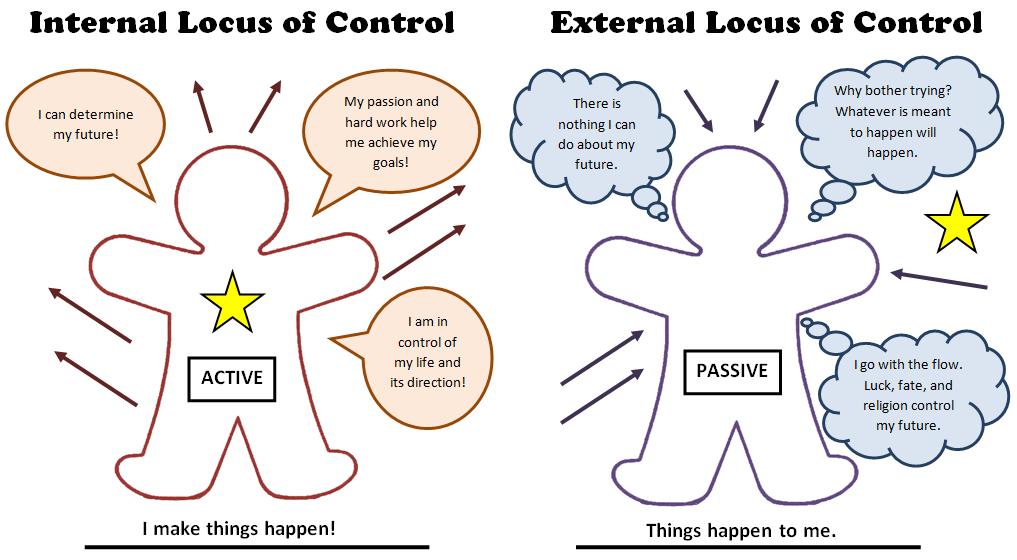
Refers to how much control a person perceives they have over their own behaviour. A person either has an internal locus of control or an external one.

Internal refers to a person making things happen and actively looking to do things. They are responsible for their actions e.g. I did well on my exams because I revised.

External is when a person simply lets something happen to them with no control, and passively accept, often putting their actions down to external influences or luck. e.g. I did well on the exam because it was easy.

Its been found that people with internal locus of control are less conforming and obedient. ROTTER states that people with internal locus of control are better than those who are external when resisting social pressures, as they feel responsible for their actions.

Social Influence 1.6- Dispositional explanation

Authoritarian Personality AO1

ADORNO et al (1950), believed that personality (dispositional) factors could be the explanation for obedience, rather than situational (environmental) factors. They proposed the idea of a authoritarian personality, where a person who shows this trait admired obedience and authority figures (more prone to obey).

ELMS and MILGRAM (1966), wanted to see whether the original participants in Milgram’s original study displayed this personality trait. The sample had 20 participants that administered the full 450 volts and 20 disobedient participants which refused to continue.

Procedure-

Each participant completed personality questionnaires, including Adorno’s F scale, to measure their level of authoritarian personality. They were also asked questions about their relationship with parents, and their relationship between the experimenter and learner during the original study.

Findings-

They found that the obedient participants scored higher on the F scale, when compared to those who were originally disobedient. It was found from the interviews that the obedient participants were not close to their fathers during childhood but admired the experimenter in the original study, which was the opposite to the disobedient participants.

Showing a higher level of authoritarian personality in people that obeyed during the study.

Social Influence 1.5- Explanations of obedience

Obedience- a type of social influence where a person follows an order from another who is in authority.

MILGRAM (1963) shock experiment

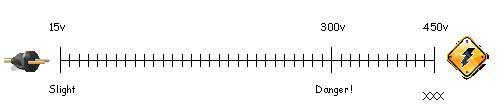
MILGRAM (1963) shock scale

Milgram tested the ‘Germans are different’ hypothesis, where it was believed that Germans are evil and Americans are not. He wanted to find out why they were so willing to kill during the holocaust.

Procedure-

-Milgram wanted to see if people would obey an authority figure. 2 participants were given the role of teacher and learner, the true participant was ALWAYS given the teacher and learner was always a confederate.

-They were placed in separate rooms, the teacher was placed with an experimenter wearing a white lab coat (WHY?) and told to administer electric shocks if the answers given were wrong. The shocks ranged from 15 volts to a deadly 450 volts resulting in death.

-The experimenter would use 4 probes if the participant refused to shock the learner, if one wasn’t obeyed, the next would be used:

  1. please continue
  2. the experiment requires you to continue
  3. it is absolutely essential that you continue
  4. you have no choice to continue

Can you see a pattern emerge from the four probes?

Unknowingly to the participant the ‘learner’ was not getting shocked.

(what is the issue with this?)

Results-

-All participants went to 300 volts, 65% were willing to go to 450 volts. Milgram conducted 18 variations of his study, where the situation (IV) was altered to test the levels of obedience (DV). When the experimenter was not present and gave the probes over the phone, obedience levels dropped to 20.5%.

AO3 Evaluation-

-Lacked ecological validity due to being carried out in a lab environment in artificial conditions. Meaning the findings are not applicable and generalisable to real life settings as people do not usually receive orders to hurt people.

-Suffers from being androcentric and only focussing on male populations.

+The study highlights why people in Nazi Germany may have been more willing to be involved with the holocaust when given the order. It shows that we can be blind to obedience and agree to something without question, when told to do something by an authority figure.

+The study was standardised, meaning it was easy to replicate (14 variants), so a cause relationship can be established to find out how obedience is undertaken.

ETHICAL ISSUES

*KEY FOR HIGH GRADE ANSWERS!*

-DECEPTION, participants believed they were actually believed they were shocking someone and was unaware the learner was a confederate

HOWEVER

+Milgram argued that illusion is needed to get true actions from participants. Milgram also interviewed participants to find the effect of the deception and 83% said they were glad to be involved, 1.3% said they wished they were not involved.

-PROTECTION OF PARTICIPANTS, participants were exposed to extremely stressful situations that may have the potential to cause psychological harm. Many showed signs of visual stress, which involved signs of tension and sweating. 3 participants had uncontrollable seizures and pleaded to stop, one seizure was so bad the experiment had to be stopped.

HOWEVER

+Milgram argued that the effects were only short term, once debriefed, participants showed reduced levels of stress as they were shown that the confederates were okay. He also followed participants after vast periods to ensure they were okay and suffered no harm.

The Agentic state AO1/AO3

The agent state refers to the theory that people will obey orders if they believe that the authority figure will take full responsibility for their actions.

Milgrams shock study supports this idea as when the experimenter told the participants that they are responsible for what happens not the participant, obedience levels rose.

In a variant of his study where the participant instructed an assistant to administer the shocks, obedience rose to 95% going to 450 volts as there was a reduction in personal responsibility.

Legitimacy of authority figure AO1

People tend to obey others if they recognise their authority as morally right or legitimate. Responses to legitimate authority is learned through schools and family.

Milgram’s study had a seemingly legitimate scientific authority meaning people tended to obey them.

Situational factors AO1

During Milgram’s variations of his original study, he altered the situation to see whether it would alter the levels of obedience. He found:

-If the authority was in uniform obedience increases, if the authority is in casual clothes, obedience decreases.

-The status and reputation of a location found that when the study was conducted at Yale (prestigious university) obedience increased, when conducted in a run down office block, obedience decreased.

-The proximity of the authority also found variants, when the authority is close obedience increased, when far away authority decreased.

Ways of teaching and delivering:

-Interactive role play task at the beginning of the lesson, simply ask a student to do something completely random not relevant to the lesson, such as “can you go and get me XYZ form so and so” if they agree, use as an example and say you agreed because I’m an authority figure and ask what would you have said if your mate asked you to do the same during my lesson?

-After the role play task, deliver Milgram’s shock study and explain the variants and reasons for obedience.

Social Influence 1.4- Conformity to social roles

Social roles are part of peoples social groups, they include job roles, such as teachers and police. There is considerable amounts of pressure to conform to expectations of social roles, by conforming this is called identification.

ZIMBARDO (1973) Stanford prison experiment

AO1

ZIMBARDO (1973) Stanford prison uniform

Procedure-

Zimbardo converted the basement of the university into a mock prison setting and advertised to students on campus for the role of of prisoner and guard over a 2 week period. The roles were randomly assignment and participants were given uniforms fitting to their role.

Along with the main uniform guards were also given REFLECTIVE SUNGLASSES (why is this? discuss)

Guards worked 8 hour shifts and were not permitted to use physical violence. Zimbardo examined behaviour in both the prisoners and the guards, and also acted as the prisons warden.

Prisoners were collected from their homes in a police car to make the experiment seem real.

Findings-

Within a short time frame participants, both guard and prisoner began to settle into roles. Guards began fit into their role of ‘power’ quicker.

Guards began to harass prisoners and acted in a brutal manner towards the prisoners and were shown to be enjoying their torment. Prisoners also began to conform to the rules and made sure another didn’t act out as they were punished as a collective.

AO3 Evaluation-

+Although the study was cut short, the study altered the ways that US prisons were ran. Juvenils accused of crimes are not housed with adult prisoners before a trial due to risks of violence.

-Participants were not protected from psychological harm and experienced humiliation and distress throughout. One prisoner was released after 36 hours due to uncontrollable bursts of screaming and crying.

HOWEVER

+Zimbardo responded to this, claiming the study was not meant to cause emotional distress and debrief sessions were given for several years with no long term affects found.

+The study led to the creation of ethical guidelines in psychological research. Resulting in studies having to gain ethical approval before they are conducted, research is assessed on the potential benefits it will create, against the psychological risk.

-The study gives an increased demand characteristic, as post study multiple participants revealed that they were simply acting the role they played as they thought that it was what Zimbardo wanted.

-Androcentric population bias, due to the study only involving male participants and them all being from a US University. Meaning that the study isn’t applicable to females or anyone outside of the US.

Ways of teaching and delivering-

-First ask students if they have ever heard or come across the study, to find the students understanding and prior knowledge.

-Deliver to the group and throughout highlight key areas and ask why they might lead to conformity. eg, how does having mirrored sunglasses allow the guards to stick in their roles, and why is it important that participants wore uniforms?

Social Influence 1.3- Variables affecting conformity

Asch (1951) Line Study

AO1

ASCH 1951 Line comparison task

Procedure-

5-7 participants in a group, each participant given a standard line, and three comparison lines (see above). Participants then had to say aloud which line they thought matched the standard line.

Each group had one true participant with the rest of the group being confederates (actors), that were told to give the wrong answer in 12 out of 18 trials.

Results-

The true participants conformed on 32% of the critical trials, where confederates gave the wrong answer. 75% of the sample conformed at least once.

AO3 Evaluation-

+Gives support to normative influence as participants said they agreed with the majority, even though they knew deep down they were wrong

-Lacks ecological validity, judging lengths of lines is not reflective of daily life, or conforming in real life settings

-Gender bias, the study is androcentric and focuses on males only and ignored females, meaning the study can only be applied to the male population

-Deception, the study suffers issues of ethics due to participants being deceived to the real aims of the study, resulting in them not giving informed consent and risking embarrassment for wrong answers

Factors affecting conformity

Between 1952-1956 Asch manipulated the procedure (IV) to investigate which situational factors influenced levels of conformity (DV)

  • Group size

-group sizes were altered to see the effects it had on group conformity. The bigger the majority, the higher level of conformity, until a certain point.

The presence of:

-1 confederate gave 3%

-2 confederate gave 13%

-3 or more gave 32%

-4+ confederates conformity did not increase as much

because of this, groups of 3 to 4 is seen as the optimal group size for conformity.

STUDY LINK

BROWN and BYRNE (1997), suggest that people may suspect cohesion behaviour between other participants if they rise over a number of 4

HOGG and VAUGHAN (1995), the most robust findings show that conformity reaches its full extent with a 3-5 person majority, additional members have little affects on conformity

  • Group unanimity

-a person is more likely to conform when all members of the group are in agreement and give the same answer. When one person in the group gave a different answer from the others, and the group answer was not unanimous, conformity levels fell.

STUDY LINK

ASCH (1951), found the presence of just one confederate that goes against the majority choice can reduce conformity as much as 80%.

  • Difficulty of task

-when the comparison lines were made similar in length it was harder to judge the correct answer and conformity levels increased. When we are uncertain on something, we look to others for confirmation (informational influence). The more difficult, the higher the levels of conformity.

  • Answer in private

-when participants answered in private conformity levels decreased. This is due to the lack of group pressure, meaning normative influences are not as powerful, due to having no fear of group rejection.

Design a site like this with WordPress.com
Get started