Independent behaviour is a term used to describe behaviour that doesn’t seem to be influenced by other people, and occurs when people resist pressures to conform or obey.
- Social Support
In a variant of ASCH (1951) the presence of a dissident (non conforming confederate) led to a decrease in conformity levels, due to the dissident giving the participant confidence to reject the majority.
This is ALSO present during one of MILGRAM’s variants, where two confederate teachers refused to obey, one stopped at 150 volts and the other 210 volts. Leading the pressure to conform to lower to 10%.
- Locus of control
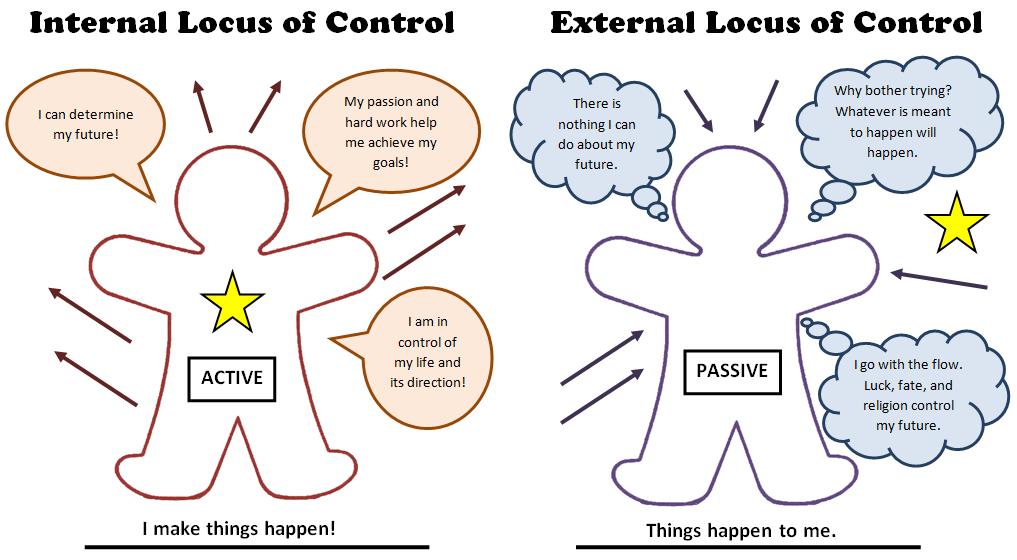
Refers to how much control a person perceives they have over their own behaviour. A person either has an internal locus of control or an external one.
Internal refers to a person making things happen and actively looking to do things. They are responsible for their actions e.g. I did well on my exams because I revised.
External is when a person simply lets something happen to them with no control, and passively accept, often putting their actions down to external influences or luck. e.g. I did well on the exam because it was easy.
Its been found that people with internal locus of control are less conforming and obedient. ROTTER states that people with internal locus of control are better than those who are external when resisting social pressures, as they feel responsible for their actions.
 Social Sciences PGCE Austin Foster