Obedience- a type of social influence where a person follows an order from another who is in authority.
MILGRAM (1963) shock experiment
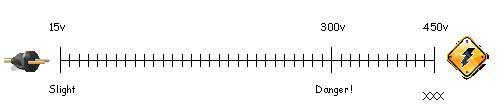
Milgram tested the ‘Germans are different’ hypothesis, where it was believed that Germans are evil and Americans are not. He wanted to find out why they were so willing to kill during the holocaust.
Procedure-
-Milgram wanted to see if people would obey an authority figure. 2 participants were given the role of teacher and learner, the true participant was ALWAYS given the teacher and learner was always a confederate.
-They were placed in separate rooms, the teacher was placed with an experimenter wearing a white lab coat (WHY?) and told to administer electric shocks if the answers given were wrong. The shocks ranged from 15 volts to a deadly 450 volts resulting in death.
-The experimenter would use 4 probes if the participant refused to shock the learner, if one wasn’t obeyed, the next would be used:
- please continue
- the experiment requires you to continue
- it is absolutely essential that you continue
- you have no choice to continue
Can you see a pattern emerge from the four probes?
Unknowingly to the participant the ‘learner’ was not getting shocked.
(what is the issue with this?)
Results-
-All participants went to 300 volts, 65% were willing to go to 450 volts. Milgram conducted 18 variations of his study, where the situation (IV) was altered to test the levels of obedience (DV). When the experimenter was not present and gave the probes over the phone, obedience levels dropped to 20.5%.
AO3 Evaluation-
-Lacked ecological validity due to being carried out in a lab environment in artificial conditions. Meaning the findings are not applicable and generalisable to real life settings as people do not usually receive orders to hurt people.
-Suffers from being androcentric and only focussing on male populations.
+The study highlights why people in Nazi Germany may have been more willing to be involved with the holocaust when given the order. It shows that we can be blind to obedience and agree to something without question, when told to do something by an authority figure.
+The study was standardised, meaning it was easy to replicate (14 variants), so a cause relationship can be established to find out how obedience is undertaken.
ETHICAL ISSUES
*KEY FOR HIGH GRADE ANSWERS!*
-DECEPTION, participants believed they were actually believed they were shocking someone and was unaware the learner was a confederate
HOWEVER
+Milgram argued that illusion is needed to get true actions from participants. Milgram also interviewed participants to find the effect of the deception and 83% said they were glad to be involved, 1.3% said they wished they were not involved.
-PROTECTION OF PARTICIPANTS, participants were exposed to extremely stressful situations that may have the potential to cause psychological harm. Many showed signs of visual stress, which involved signs of tension and sweating. 3 participants had uncontrollable seizures and pleaded to stop, one seizure was so bad the experiment had to be stopped.
HOWEVER
+Milgram argued that the effects were only short term, once debriefed, participants showed reduced levels of stress as they were shown that the confederates were okay. He also followed participants after vast periods to ensure they were okay and suffered no harm.
The Agentic state AO1/AO3
The agent state refers to the theory that people will obey orders if they believe that the authority figure will take full responsibility for their actions.
Milgrams shock study supports this idea as when the experimenter told the participants that they are responsible for what happens not the participant, obedience levels rose.
In a variant of his study where the participant instructed an assistant to administer the shocks, obedience rose to 95% going to 450 volts as there was a reduction in personal responsibility.
Legitimacy of authority figure AO1
People tend to obey others if they recognise their authority as morally right or legitimate. Responses to legitimate authority is learned through schools and family.
Milgram’s study had a seemingly legitimate scientific authority meaning people tended to obey them.
Situational factors AO1
During Milgram’s variations of his original study, he altered the situation to see whether it would alter the levels of obedience. He found:
-If the authority was in uniform obedience increases, if the authority is in casual clothes, obedience decreases.
-The status and reputation of a location found that when the study was conducted at Yale (prestigious university) obedience increased, when conducted in a run down office block, obedience decreased.
-The proximity of the authority also found variants, when the authority is close obedience increased, when far away authority decreased.
Ways of teaching and delivering:
-Interactive role play task at the beginning of the lesson, simply ask a student to do something completely random not relevant to the lesson, such as “can you go and get me XYZ form so and so” if they agree, use as an example and say you agreed because I’m an authority figure and ask what would you have said if your mate asked you to do the same during my lesson?
-After the role play task, deliver Milgram’s shock study and explain the variants and reasons for obedience.
 Social Sciences PGCE Austin Foster